
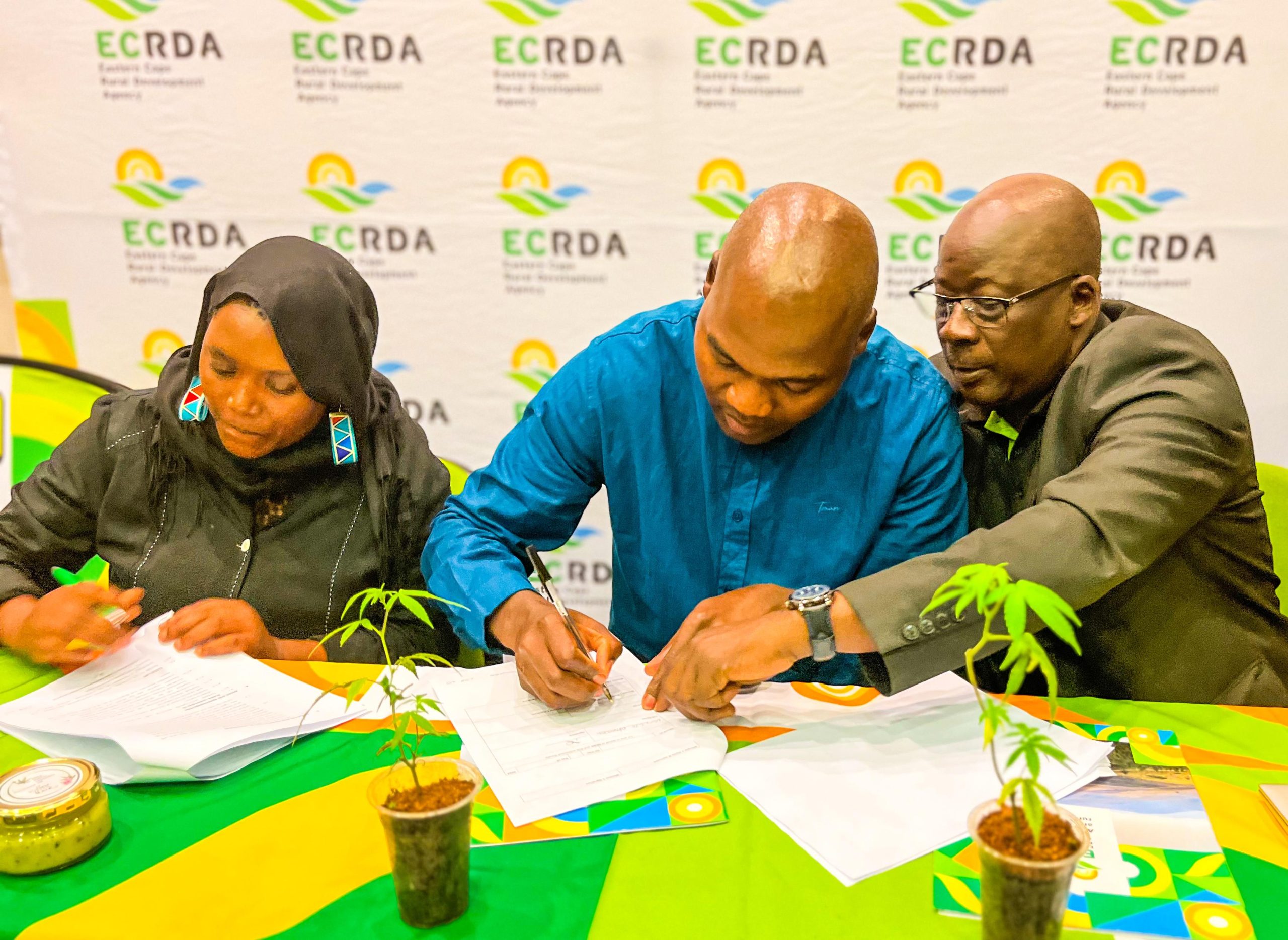
The Eastern Cape Rural Development Agency (ECRDA) has taken a significant step toward empowering rural cannabis growers by signing a Memorandum of Understanding (MOU) with the Mpondoland Cannabis Belt Association.
This historic partnership, formalized at the Lusikisiki Resource Centre, aims to bolster the commercial prospects of Mpondoland’s cannabis industry, focusing on the conservation, protection, and commercialization of local cannabis landrace strains. These strains, which are grown using traditional knowledge, hold potential for medicinal, recreational, and industrial uses.
The Mpondoland Cannabis Belt Association represents several municipalities, including Ntabankulu, Winnie Madikizela-Mandela, Ingquza Hill, Port St John’s, and Nyandeni. The initiative is supported by key government entities, such as the Technology Innovation Agency, Small Enterprise Development Agency, the Council for Scientific & Industrial Research, Agricultural Research Council, Walter Sisulu University, and Nelson Mandela University. Local government support from municipalities like Ingquza Hill and OR Tambo District further underscores the collective effort to develop this sector.
Mpondoland is already known for its long history of cannabis cultivation, particularly of indigenous landrace strains. With the growing movement toward legalizing cannabis in South Africa for medical, recreational, and industrial purposes, this partnership holds considerable promise for the region’s economic development. It is expected to boost rural economies, create jobs, and attract investment.
The ECRDA’s role in this partnership is crucial. The agency has long been committed to improving rural livelihoods in the Eastern Cape, and this collaboration is a strategic move to support local farmers by enhancing their production capabilities and integrating them into the formal cannabis market. The partnership will focus on improving business practices, offering training, mobilizing resources, building infrastructure, and securing market pathways to enhance cannabis production, processing, and distribution.
According to Mr. Navy Simukonda, Executive for Integrated Programmes Management at the ECRDA, the Mpondo people, with their deep-rooted knowledge and experience in cannabis cultivation, are well-positioned to lead the province’s cannabis industry. This partnership, he says, will lead to job creation, economic growth, and increased investment in the region.
Mr. Vuyisile Dlamini, Chairperson of the Mpondoland Cannabis Belt Association, expressed his appreciation for the partnership, noting that the support from the ECRDA and other government agencies is crucial in helping local farmers understand and capitalize on the cannabis sector’s commercial potential.
This initiative aligns with South Africa’s efforts to position itself as a leader in the global legal cannabis market. With Mpondoland’s unique resources and the backing of both government and industry, the region is poised for economic transformation. The ECRDA’s involvement ensures that the cannabis sector in Mpondoland will be sustainable, competitive, and beneficial to the broader community.







Recent Comments